JEE Main 2024 · previous year paper
JEE Main 2024 — 8 April, Shift 1
80 questions with the verified answer key. Open any question for its step-by-step solution.
- Question 1Mathematics· Definite Integration
The value of for which the integral , satisfies is:
- Option A:
10
- Option B:
8
- Option C:
14
- Option D:
7
Answer: DStep-by-step solution → - Question 2Mathematics· Quadratic Equations
The sum of all the solutions of the equation is :
- Option A:
- Option B:
- Option C:
- Option D:
Answer: CStep-by-step solution → - Question 3Mathematics· Circles
Let the circles and touch each other
externally at the point . If the point divides the line segment joining the centres of the circles
and internally in the ratio , then equals
- Option A:
110
- Option B:
130
- Option C:
125
- Option D:
145
Answer: BStep-by-step solution → - Question 4Mathematics· 3D Geometry
Let be a point in the first octant, whose projection in the xy-plane is the point Q . Let ; the angle between OQ and the positive -axis be ; and the angle between OP and the positive -axis be , where O is the origin. Then the distance of P from the x -axis is :
- Option A:
- Option B:
- Option C:
- Option D:
Answer: AStep-by-step solution → - Question 5Mathematics· Application of Derivatives
The number of critical points of the function is :
- Option A:
2
- Option B:
0
- Option C:
1
- Option D:
3
Answer: AStep-by-step solution → - Question 6Mathematics· Differential Equations
Let be a positive function such that the area bounded by from to is . Then the differential equation, whose general solution is , where and are arbitrary constants, is :
- Option A:
- Option B:
- Option C:
- Option D:
Answer: CStep-by-step solution → - Question 7Mathematics· Application of Derivatives
Let . The number of points of local maxima of in interval is:
- Option A:
1
- Option B:
2
- Option C:
3
- Option D:
4
Answer: BStep-by-step solution → - Question 8Mathematics· Matrices
Let A=\left[ \begin{array}{*{35}{l}}2 & a & 0 \\1 & 3 & 1 \\0 & 5 & b \\\end{array} \right].If , where I is the identity matrix of order , then is equal to :
- Option A:
- Option B:
- Option C:
- Option D:
Answer: BStep-by-step solution → - Question 9Mathematics· 3D Geometry
If the shortest distance between the lines
is ,
where , then the value of equals.
- Option A:
384
- Option B:
387
- Option C:
377
- Option D:
390
Answer: BStep-by-step solution → - Question 10Mathematics· Probability
Let the sum of two positive integers be 24 . If the probability, that their product is not less than times their greatest positive product, is , where , then equals :
- Option A:
9
- Option B:
11
- Option C:
8
- Option D:
10
Answer: DStep-by-step solution → - Question 11Mathematics· Trigonometry Ratios and Identities
If , where , then is equal to :
- Option A:
109
- Option B:
108
- Option C:
18
- Option D:
19
Answer: AStep-by-step solution → - Question 12Mathematics· Indefinite Integration
Let . If , then is equal to :
- Option A:
- Option B:
- Option C:
- Option D:
Answer: BStep-by-step solution → - Question 13Mathematics· Straight lines
The equations of two sides AB and AC of triangle are and , respectively. The point divides the third side BC internally in the ratio . The equation of the side BC is :
- Option A:
- Option B:
- Option C:
- Option D:
Answer: CStep-by-step solution → - Question 14Mathematics· Functions
Let be the greatest integer less than or equal to t. Let A be the set of al prime factors of 2310 and
be the function . The number of one-to-one functions from A to the range of is :
- Option A:
20
- Option B:
120
- Option C:
25
- Option D:
24
Answer: BStep-by-step solution → - Question 15Mathematics· Complex Numbers
Let be a complex number such that and . Then the value of is :
- Option A:
- Option B:
- Option C:
- Option D:
Answer: DStep-by-step solution → - Question 16Mathematics· Complex Numbers
If the set has elements and ,
where , then the value of is :
- Option A:
8
- Option B:
12
- Option C:
4
- Option D:
5
Answer: BStep-by-step solution → - Question 17Mathematics· Application of Derivatives
For the function , between the following two statements
Statement I : for only one value of is .
Statement II : is decreasing in and increasing in
In the light of the above statements, choose the correct answer from the options given below :
- Option A:
Both statement I and statement Il are correct.
- Option B:
Statement I is correct and statement Il is incorrect.
- Option C:
Statement I is incorrect and statement Il is correct.
- Option D:
Both statements 1 and statements ll are incorrect.
Answer: BStep-by-step solution → - Question 18Mathematics· Vector Algebra
The set of all , for which the vector and are inclined at an obtuse angle for all is :
- Option A:
- Option B:
- Option C:
- Option D:
Answer: CStep-by-step solution → - Question 19Mathematics· Differential Equations
Let be the solution of the differential equation ,
. Then is equal to :
- Option A:
- Option B:
- Option C:
- Option D:
Answer: CStep-by-step solution → - Question 20Mathematics· Hyperbola
Let be the hyperbola, whose eccentricity is and the length of the latus rectum is . Suppose the point lies on . If is the product of the focal distances of the point , then is equal to :
- Option A:
170
- Option B:
171
- Option C:
169
- Option D:
172
Answer: BStep-by-step solution → - Question 21Mathematics· Matrices
Let . If the sum of the diagonal elements of is , then is equal to
Answer: 7Step-by-step solution → - Question 22Mathematics· Straight lines
If the orthocentre of the triangle formed by the lines and ,
is the centroid of another triangle, whose circumecentre and orthocentre respectively are and ,
then the value of is
Answer: 16Step-by-step solution → - Question 23Mathematics· Probability
Three balls are drawn at random from a bag containing 5 blue and 4 yellow balls. Let the random variables X and Y respectively denote the number of blue and Yellow balls. If and are the means of and respectively, then is equal to .
Answer: 17Step-by-step solution → - Question 24Mathematics· Permutations and Combinations
The number of 3-digit numbers, formed using the digits and 7 , when the repetition of digits is not allowed, and which are not divisible by 3 , is equal to
Answer: 36Step-by-step solution → - Question 25Mathematics· Sequence and Series
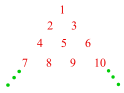
Let the positive integers be written in the form
If the row contains exactly k numbers for every natural number k , then the row in which the number 5310 will be, is
 Answer: 103Step-by-step solution →
 - Question 26Mathematics· Functions
If the range of is , then the sum of the infinite G.P., whose first term is 64 and the common ratio is , is equal to
Answer: 96Step-by-step solution → - Question 27Mathematics· Binomial Theorem
Let and . If ,
then the value of is
Answer: 5Step-by-step solution → - Question 28Mathematics· Vector Algebra
Let and be three given vectros. If is a vector
such that and , then is equal to
Answer: 569Step-by-step solution → - Question 29Mathematics· Area under the Curves
Let the area of the region enclosed by the curve and the x -axis between to be . Then is equal to
Answer: 16Step-by-step solution → - Question 30Mathematics· Limits, Continuity and Differentiability
The value of is
Answer: 55Step-by-step solution → - Question 31Physics· Work, Power & Energy
Three bodies and C have equal kinetic energies and their masses are and 1.6 kg respectively. The ratio of their linear momenta is :
- Option A:
- Option B:
- Option C:
- Option D:
Answer: AStep-by-step solution → - Question 32Physics· Atomic Physics
Average force exerted on a non-reflecting surface at normal incidence is . If is the light energy flux during span of 1 hour 30 minutes. Then the area of the surface is:
- Option A:
- Option B:
- Option C:
- Option D:
Answer: BStep-by-step solution → - Question 33Physics· Atomic Physics
A proton and an electron are associated with same de-Broglie wavelength. The ratio of their kinetic energies is:
(Assume and times )
- Option A:
- Option B:
- Option C:
- Option D:
Answer: AStep-by-step solution → - Question 34Physics· Kinetic Theory of Gases
A mixture of one mole of monoatomic gas and one mole of a diatomic gas (rigid) are kept at room temperature . The ratio of specific heat of gases at constant volume respectively is:
- Option A:
- Option B:
- Option C:
- Option D:
Answer: CStep-by-step solution → - Question 35Physics· Units, Dimensions & Error Analysis
In an expression :
- Option A:
a is order of magnitude for
- Option B:
b is order of magnitude for
- Option C:
b is order of magnitude for
- Option D:
is order of magnitude for
Answer: BStep-by-step solution → - Question 36Physics· Nuclear Physics
Binding energy of a certain nucleus is . How much is the difference between total mass of all the nucleons and nuclear mass of the given nucleus:
- Option A:
- Option B:
- Option C:
- Option D:
Answer: BStep-by-step solution → - Question 37Physics· Magnetism and Matter
Paramagnetic substances:
A. align themselves along the directions of external magnetic field.
B. attract strongly towards external magnetic field.
C. has susceptibility little more than zero.
D. move from a region of strong magnetic field to weak magnetic field.
Choose the most appropriate answer from the options given below:
- Option A:
A, B, C, D
- Option B:
B, D Only
- Option C:
A, B, C Only
- Option D:
A, C Only
Answer: DStep-by-step solution → - Question 38Physics· Rotational Dynamics
A clock has long second hand and minute hand respectively. In 30 minutes duration the tip of second hand will travel x distance more than the tip of minute hand. The value of in meter is nearly (Take ) :
- Option A:
139.4
- Option B:
140.5
- Option C:
220
- Option D:
118.9
Answer: AStep-by-step solution → - Question 39Physics· Units, Dimensions & Error Analysis
Young's modulus is determined by the equation given by where is the mass and is the extension of wire used in the experiment. Now error in Young modules(Y) is estimated by taking data from plot in graph paper. The smallest scale divisions are 5 g and 0.02 cm along load axis and extension axis respectively. If the value of M and are 500 g and 2 cm respectively then percentage error of Y is :
- Option A:
- Option B:
- Option C:
- Option D:
Answer: CStep-by-step solution → - Question 40Physics· Thermodynamics
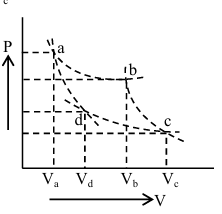
Two different adiabatic paths for the same gas intersect two isothermal curves as shown in diagram. The relation between the ratio and the is: \end{enumerate}
- Option A:
- Option B:
- Option C:
- Option D:
Answer: CStep-by-step solution → - Question 41Physics· Gravitation
Two planets and having masses and move around the sun in circular orbits of and radii respectively. If angular momentum of A is L and that of is , the ratio of time period is:
- Option A:
- Option B:
- Option C:
- Option D:
Answer: CStep-by-step solution → - Question 42Physics· Alternating Current
A LCR circuit is at resonance for a capacitor C , inductance and resistance . Now the value of resistance is halved keeping all other parameters same. The current amplitude at resonance will be now:
- Option A:
Zero
- Option B:
double
- Option C:
same
- Option D:
halved
Answer: BStep-by-step solution → - Question 43Physics· Electrostatics
Two charged conducting spheres of radii and are connected to each other by a conducting wire. The ratio of charges of the two spheres respectively is:
- Option A:
- Option B:
ab
- Option C:
- Option D:
Answer: CStep-by-step solution → - Question 44Physics· Fluid Mechanics
Correct Bernoulli's equation is (symbols have their usual meaning) :
- Option A:
constant
- Option B:
constant
- Option C:
constant
- Option D:
constant
Answer: BStep-by-step solution → - Question 45Physics· Newton's Laws of Motion
A player caught a cricket ball of mass 150 g moving at a speed of . If the catching process is completed in 0.1 s , the magnitude of force exerted by the ball on the hand of the player is:
- Option A:
150 N
- Option B:
3 N
- Option C:
30 N
- Option D:
300 N
Answer: CStep-by-step solution → - Question 46Physics· System Of Particles
A stationary particle breaks into two parts of masses and which move with velocities and respectively. The ratio of their kinetic energies is :
- Option A:
- Option B:
- Option C:
- Option D:
Answer: AStep-by-step solution → - Question 47Physics· Geometrical Optics
Critical angle of incidence for a pair of optical media is . The refractive indices of first and second media are in the ratio:
- Option A:
- Option B:
- Option C:
- Option D:
Answer: AStep-by-step solution → - Question 48Physics· Units, Dimensions & Error Analysis
The diameter of a sphere is measured using a vernier caliper whose 9 divisions of main scale are equal to 10 divisions of vernier scale. The shortest division on the main scale is equal to 1 mm . The main scale reading is 2 cm and second division of vernier scale coincides with a division on main scale. If mass of the sphere is 8.635 g , the density of the sphere is:
- Option A:
- Option B:
- Option C:
- Option D:
Answer: DStep-by-step solution → - Question 49Physics· System Of Particles
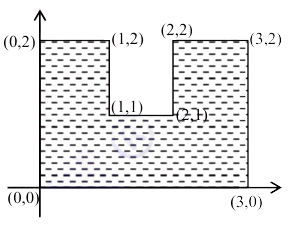
A uniform thin metal plate of mass 10 kg with dimensions is shown. The ratio of x and y coordinates of center of mass of plate in .The value of is .
 Answer: 15Step-by-step solution →
 - Question 50Physics· Moving Charges and Magnetic Field
An electron with kinetic energy 5 eV enters a region of uniform magnetic field of perpendicular to its direction. An electric field E is applied perpendicular to the direction of velocity and magnetic field. The value of E, so that electron moves along the same path, is . (Given, mass of electron , electric charge )
Answer: 4Step-by-step solution → - Question 51Physics· Thermal Properties of Matter
Resistance of a wire at and is found to be and respectively. The temperature in Kelvin scale is .
Answer: 748Step-by-step solution → - Question 52Physics· Electrostatics
An electric field, passes through the surface of area having unit vector . The electric flux for that surface is V m.
Answer: 12Step-by-step solution → - Question 53Physics· Mechanical Properties of Matter
A liquid column of height 0.04 cm balances excess pressure of soap bubble of certain radius. If density of liquid is and surface tension of soap solution is , then diameter of the soap bubble is cm . (if )
Answer: 7Step-by-step solution → - Question 54Physics· Sound Waves
A closed and an open organ pipe have same lengths. If the ratio of frequencies of their seventh overtones is then the value of is .
Answer: 16Step-by-step solution → - Question 55Physics· Vectors and Scalars
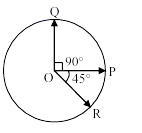
Three vectors and each of magnitude A are acting as shown in figure. The resultant of the three vectors is . The value of is
 Answer: 3Step-by-step solution →
 - Question 56Physics· Wave Optics
A parallel beam of monochromatic light of wavelength 600 nm passes through single slit of 0.4 mm width. Angular divergence corresponding to second order minima would be .
Answer: 6Step-by-step solution → - Question 57Physics· Atomic Physics
In an alpha particle scattering experiment distance of closest approach for the particle is . If target nucleus has atomic number 80, then maximum velocity of -particle is approximately. SI unit, mass of particle
Answer: 156Step-by-step solution → - Question 58Chemistry· IUPAC Nomenclature
Given below are two statements:
Statement I :

IUPAC name of Compound A is 4-chloro-1, 3-dinitrobenzene:
Statement II:

IUPAC name of Compound B is 4-ethyl-2-methylaniline. In the light of the above statements, choose the most appropriate answer from the options given below:
- Option A:
Both Statement I and Statement II are correct
- Option B:
Statement I is incorrect but Statement II is correct
- Option C:
Statement I is correct but Statement II is incorrect
- Option D:
Both Statement I and Statement II are incorrect
Answer: BStep-by-step solution → - Question 59Chemistry· Some Basic Concepts of Chemistry (Mole Concept) + Stoichiometry
Combustion of glucose produces and water. The amount of oxygen (in g) required for the complete combustion of of glucose is:
[Given: Molar mass of glucose = ]
- Option A:
480
- Option B:
960
- Option C:
800
- Option D:
32
Answer: BStep-by-step solution → - Question 60Chemistry· p-Block (I) (Grp. 13, 14)
Given below are two statements, one is labelled as Assertion (A) and the other is labelled as Reason (R).
Assertion (A): The stability order of +1 oxidation state of Ga , In and Tl is .
Reason (R): The inert pair effect stabilizes the lower oxidation state down the group.
In the light of the above statements, choose the correct answer from the options given below :
- Option A:
Both (A) and (R) are true and (R) is the correct explanation of (A).
- Option B:
Both (A) and (R) are true but (R) is NOT the correct explanation of (A).
- Option C:
(A) is true but (R) is false.
- Option D:
(A) is false but (R) is true.
Answer: AStep-by-step solution → - Question 61Chemistry· Practical Inorganic chemistry (Qualitative Analysis)
Match List I with List-II
List-I (Name of the test) List-II(Reaction sequence involved) 1 Borax bead test I. CoO. MO 2 Charcoal cavity test II. 3 Cobalt nitrate III 4 Flame test IV Choose the correct answer from the option below :
- Option A:
A-III, B-I, C-IV, D-II
- Option B:
A-III, B-II, C-IV, D-I
- Option C:
A-III, B-I, C-II, D-IV
- Option D:
A-III, B-IV, C-I, D-II
Answer: DStep-by-step solution → - Question 62Chemistry· Chemical Bonding
Match List I and with List II
List-I (Molecule) List-II(Shape) A I. Square pyramid B. II. Tetrahedral C. III Trigonal pyramidal D. IV Trigonal bipyramidal Choose the correct answer from the option below :
- Option A:
A-IV, B-III, C-I, D-II
- Option B:
A-II, B-IV, C-I, D-III
- Option C:
A-III, B-I, C-IV, D-II
- Option D:
A-III, B-IV, C-I, D-II
Answer: CStep-by-step solution → - Question 63Chemistry· Chemical Equilibrium
For the given hypothetical reactions, the equilibrium constants are as follows:
The equilibrium constant for the reaction is .
- Option A:
6
- Option B:
12
- Option C:
8
- Option D:
7
Answer: CStep-by-step solution → - Question 64Chemistry· Redox Reactions
Thiosulphate reacts differently with iodine and bromine in the reaction given below :
Which of the following statement justifies the above dual behaviour of thiosulphate?
- Option A:
Bromine undergoes oxidation and iodine undergoes reduction by iodine in these reactions
- Option B:
Thiosulphate undergoes oxidation by bromine and reduction by iodine in these reaction
- Option C:
Bromine is a stronger oxidant than iodine
- Option D:
Bromine is a weaker oxidant than iodine
Answer: CStep-by-step solution → - Question 65Chemistry· Coordination Compounds
An octahedral complex with the formula upon reaction with excess of solution given 2 moles of AgCl . Consider the oxidation state of Co in the complex is ' '. The value of " " is
- Option A:
3
- Option B:
6
- Option C:
8
- Option D:
5
Answer: CStep-by-step solution → - Question 66Chemistry· Biomolecules

The incorrect statement regarding the given structure is
- Option A:
Can be oxidized to a dicarboxylic acid with water
- Option B:
despite the presence of -CHO does not give Schiff's test
- Option C:
has 4-asymmetric carbon atom
- Option D:
will coexist in equilibrium with 2 other cyclic structure
Answer: AStep-by-step solution → - Question 67Chemistry· p-Block Elements (Group 15-18)
Among the following halogens and Which can undergo disproportionation reaction?
- Option A:
Only I2
- Option B:
and
- Option C:
and
- Option D:
and
Answer: BStep-by-step solution → - Question 68Chemistry· p-Block Elements (Group 15-18)
Given below are two statements, one is labelled as Statement I and the other is labelled as Statement II.
Statement I : and can act as ligands to form transition metal complexes.
Statement II: As and are from same group, the nature of bonding of and is always same with transition metals.
In the light of the above statements, choose the most appropriate answer from the options given below:
- Option A:
Statement I is incorrect but Statement II is correct
- Option B:
Both Statement I and Statement II are correct
- Option C:
Statement I is correct but Statement II is incorrect
- Option D:
Both Statement I and Statement II are incorrect
Answer: CStep-by-step solution → - Question 69Chemistry· Periodicity of Elements and Periodic Properties
Match List I with List II.
List-I (Elements) List-II(Properties in their respective groups) A I. Elements with highest electronegativity B. II. Elements with largest atomic size C. III. Elements which show properties of both metals and non-metal D. IV. Elements with highest negative electron gain enthalpy Choose the correct answer from the options given below
- Option A:
A-II, B-III, C-IV, D-I
- Option B:
A-III, B-II, C-I, D-IV
- Option C:
A-IV, B-III, C-II, D-I
- Option D:
A-II, B-I, C-IV, D-III
Answer: CStep-by-step solution → - Question 70Chemistry· d and f Block Elements
Iron (III) catalyses the reaction between iodide and persulphate ions, in which
A. oxidises the iodide ion
B. oxidises the persulphate ion
C. reduces the iodide ion
D. reduces the persulphate ion
Choose the most appropriate answer from the options given below:
- Option A:
B and C only
- Option B:
B only
- Option C:
A only
- Option D:
A and D only
Answer: DStep-by-step solution → - Question 71Chemistry· Practical Inorganic chemistry (Qualitative Analysis)
Match List I with List II
List-I (Compound) List-II (Colour) A I. Violet B. II. Blood Red C. III. Prussian Blue D. IV. Yellow Choose the correct answer from the options given below :
- Option A:
A-III, B-I, C-II, D-IV
- Option B:
A-IV, B-I, C-II, D-III
- Option C:
A-II, B-III, C-IV, D-I
- Option D:
4 A-I, B-II, C-III, D-IV
Answer: AStep-by-step solution → - Question 72Chemistry· Coordination Compounds
Number of complexes with even number of electrons in orbitals is -
,
- Option A:
1
- Option B:
3
- Option C:
2
- Option D:
5
Answer: CStep-by-step solution → - Question 73Chemistry· Carboxylic Acids and Derivatives
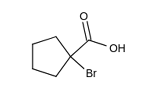
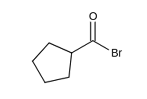
Identify the product in the following reaction:

- Option A:
- Option B:
- Option C:
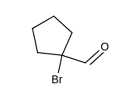
- Option D:
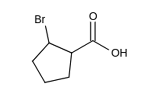
Answer: AStep-by-step solution → - Question 74Chemistry· Thermodynamics & Thermochemistry

Consider the figure provided.
1 mol of an ideal gas is kept in a cylinder, fitted with a piston, at the position A , at . If the piston is moved to position B ,
keeping the temperature unchanged, then ' ' L atm work is done in this reversible process.
L atm. (nearest integer) [Given : Absolute temperature 273.15,
Answer: 55Step-by-step solution → - Question 75Chemistry· Nitrogen Containing Organic Compounds
Number of amine compounds from the following giving solids which are soluble in NaOH upon reaction with Hinsberg's reagent is
 Answer: 5Step-by-step solution →
 - Question 76Chemistry· d and f Block Elements
The 'spin only' magnetic moment value of is BM. (Where M is a metal having least metallic radii. among
and Zn ). (Given atomic number : , and
)
Answer: 0Step-by-step solution → - Question 77Chemistry· Nitrogen Containing Organic Compounds
If 279 g of aniline is reacted with one equivalent of benzenediazonium chloride, the mximum amount of aniline yellow formed will be g. (nearest integer) (consider complete conversion)
Answer: 591Step-by-step solution → - Question 78Chemistry· Chemical Kinetics
Consider the following reaction The time taken for A to become of its initial concentration is twice the time taken to become of the same. Also, when the change of concentration of B is plotted against time, the resulting graph gives a straight line with a negative slope and a positive intercept on the concentration axis. The overall order of the reaction is
Answer: 1Step-by-step solution → - Question 79Chemistry· Carboxylic Acids and Derivatives
Major product of the following reaction has -bond.
 Answer: 5Step-by-step solution →
 - Question 80Chemistry· Solutions and Colligative Properties
A solution containing 10 g of an electrolyte in 100 g of water boils at . The degree of ionization of the
electrolyte is . (nearest integer) [Given : Molar mass of (molal boiling
point elevation const. of water) , boiling point of water ; ionises as
Answer: 5Step-by-step solution →
Stuck on one of these?
Practise questions like them — free, with a tutor that explains every step.