JEE Main 2024 · previous year paper
JEE Main 2024 — 6 April, Shift 2
86 questions with the verified answer key. Open any question for its step-by-step solution.
- Question 1Mathematics· properties of traingles
Let ABC be an equilateral triangle. A new triangle is formed by joining the middle points of all sides of the triangle ABC and the same process is repeated infinitely many times. If is the sum of perimeters and Q is be the sum of areas of all the triangles formed in this process, then:
- Option A:
- Option B:
- Option C:
- Option D:
Answer: AStep-by-step solution → - Question 2Mathematics· Sets and Relations
Let . Let R be a relation on A defined by if and only if . Let be the number of elements in R and n be the minimum number of elements from that are required to be added to R to make it a symmetric relation. Then is equal to:
- Option A:
24
- Option B:
23
- Option C:
25
- Option D:
26
Answer: CStep-by-step solution → - Question 3Mathematics· Probability
If three letters can be posted to any one of the 5 different addresses, then the probability that the three letters are posted to exactly two addresses is:
- Option A:
- Option B:
- Option C:
- Option D:
Answer: AStep-by-step solution → - Question 4Mathematics· Differential Equations
Suppose the solution of the differential equation
represents a circle passing through origin. Then the radius of this circle is :
- Option A:
- Option B:
- Option C:
- Option D:
2
Answer: CStep-by-step solution → - Question 5Mathematics· Straight lines
If the locus of the point, whose distances from the point and are in the ratio
, is , then the value of is equal to:
- Option A:
5
- Option B:
-7
- Option C:
37
- Option D:
437
Answer: CStep-by-step solution → - Question 6Mathematics· Limits, Continuity and Differentiability
is equal to:
- Option A:
- Option B:
- Option C:
- Option D:
Answer: BStep-by-step solution → - Question 7Mathematics· Binomial Theorem
Let . If , then is equal to:
- Option A:
60
- Option B:
62
- Option C:
50
- Option D:
55
Answer: CStep-by-step solution → - Question 8Mathematics· Sequence and Series
A software company sets up number of computer systems to finish an assignment in 17 days. If 4 computer systems crashed on the start of the second day, 4 more computer systems crashed on the start of the third day and so on, then it took 8 more days to finish the assignment. The value of is equal to :
- Option A:
125
- Option B:
150
- Option C:
180
- Option D:
160
Answer: BStep-by-step solution → - Question 9Mathematics· Complex Numbers
If are two distinct complex number such that \left|\frac{{{\text{z}}-{}}2{{\text{z_2}}{}}}{\frac{1}{2}-{{\text{z}}_{1}}{{{\text{\overline{z_2}}}}_{}}} \right|=2 then
- Option A:
either lies on a circle of radius 1 or lies on a circle of radius
- Option B:
either lies on a circle of radius or lies on a circle of radius 1.
- Option C:
lies on a circle of radius and lies on a circle of radius 1 .
- Option D:
both and lie on the same circle.
Answer: AStep-by-step solution → - Question 10Mathematics· Application of Derivatives
If the function attains the maximum value at then :
- Option A:
- Option B:
- Option C:
- Option D:
Answer: CStep-by-step solution → - Question 11Mathematics· Vector Algebra
Let and . If is a is vector such that
and the angle between and is , then is equal to:
- Option A:
- Option B:
- Option C:
- Option D:
Answer: DStep-by-step solution → - Question 12Mathematics· Permutations and Combinations
If all the words with or without meaning made using all the letters of the word "NAGPUR" are arranged as in a dictionary, then the word at position in this arrangement is :
- Option A:
NRAGUP
- Option B:
NRAGPU
- Option C:
NRAPGU
- Option D:
NRAPUG
Answer: CStep-by-step solution → - Question 13Mathematics· Methods of Differentiation
Suppose for a differentiable function , and . If , then is equal to:
- Option A:
5
- Option B:
3
- Option C:
8
- Option D:
4
Answer: DStep-by-step solution → - Question 14Mathematics· 3D Geometry
Let be the image of the point in the line and be the point . If the area of the triangle PQR is and , then K is equal to:
- Option A:
36
- Option B:
72
- Option C:
18
- Option D:
81
Answer: DStep-by-step solution → - Question 15Mathematics· Straight lines
If be the orthocentre of the triangle whose vertices are and , then the point C lies on the circle.
- Option A:
- Option B:
- Option C:
- Option D:
Answer: AStep-by-step solution → - Question 16Mathematics· Functions
Let be a function defined on .
Then the range of the function is equal to:
- Option A:
- Option B:
- Option C:
- Option D:
Answer: DStep-by-step solution → - Question 17Mathematics· Vector Algebra
Let .
Then the square of the projection of on is :
- Option A:
- Option B:
- Option C:
- Option D:
)
Answer: BStep-by-step solution → - Question 18Mathematics· Area under the Curves
If the area of the region is then the value of is equal to :
- Option A:
2
- Option B:
0
- Option C:
-1
- Option D:
1
Answer: CStep-by-step solution → - Question 19Mathematics· Indefinite Integration
If constant, then the maximum value of , is :
- Option A:
- Option B:
- Option C:
- Option D:
Answer: AStep-by-step solution → - Question 20Mathematics· Matrices
If A is a square matrix of order 3 such that and
, then is equal to
- Option A:
3
- Option B:
2
- Option C:
4
- Option D:
6
Answer: CStep-by-step solution → - Question 21Mathematics· Limits, Continuity and Differentiability
Let [ ] denote the greatest integer less than or equal to t . Let be a function defined by . Let be the set of all points in the interval at which f is not continuous. Then is equal to
Answer: 17Step-by-step solution → - Question 22Mathematics· Hyperbola
The length of the latus rectum and directrices of a hyperbola with eccentricity e are 9 and , respectively. Let the line touch this hyperbola at . If m is the product of the focal distances of the point , then is equal to
Answer: 61Step-by-step solution → - Question 23Mathematics· Sequence and Series
If . , and
, where , then equal to
Answer: 3660Step-by-step solution → - Question 24Mathematics· Definite Integration
Let [t] denote the largest integer less than or equal to t.
If , where , then
is equal to
Answer: 23Step-by-step solution → - Question 25Mathematics· Probability
From a lot of 12 items containing 3 defectives, a sample of 5 items is drawn at random. Let the random variable X denote the number of defective items in the sample. Let items in the sample be drawn one by one without replacement. If variance of is , where , then is equal to
Answer: 71Step-by-step solution → - Question 26Mathematics· properties of traingles
In a triangle and . If ,
where , then is equal to
Answer: 39Step-by-step solution → - Question 27Mathematics· 3D Geometry
If the shortest distance between the lines and is , then the largest possible value of is equal to
Answer: 43Step-by-step solution → - Question 28Mathematics· Quadratic Equations
Let be roots of . If , then is equal to
Answer: 4Step-by-step solution → - Question 29Mathematics· Determinants
If the system of equations
has infinitely many solutions, then is equal to
Answer: 38Step-by-step solution → - Question 30Mathematics· Differential Equations
If the solution of the given differential equation passes through the point
, then the value of is equal to
Answer: 3Step-by-step solution → - Question 31Physics· Atomic Physics
The longest wavelength associated with Paschen series is : Given SI unit)
- Option A:
- Option B:
- Option C:
- Option D:
Answer: DStep-by-step solution → - Question 32Physics· Thermodynamics
A total of 48 J heat is given to one mole of helium kept in a cylinder. The temperature of helium increases by . The work done by the gas is : (Given, .)
- Option A:
72.9 J
- Option B:
24.9 J
- Option C:
48 J
- Option D:
23.1 J
Answer: DStep-by-step solution → - Question 33Physics· Units, Dimensions & Error Analysis
In finding out refractive index of glass slab the following observations were made through travelling microscope 50 vernier
scale division 49 MSD; 20 divisions on main scale in each cm For mark on paper
For mark on paper seen through slab
For powder particle on the top surface of the glass slab
Main Scale Reading, VC Vernier Coincidence) Refractive index of the glass slab is:
- Option A:
1.42
- Option B:
1.52
- Option C:
1.24
- Option D:
1.35
Answer: AStep-by-step solution → - Question 34Physics· Electromagnetic Waves
In the given electromagnetic wave , intensity of the associated light beam is
(in ); (Given )
- Option A:
486
- Option B:
243
- Option C:
729
- Option D:
972
Answer: AStep-by-step solution → - Question 35Physics· Gravitation
Assuming the earth to be a sphere of uniform mass density, a body weighed 300 N on the surface of earth. How much it would weigh at R/4 depth under surface of earth?
- Option A:
75 N
- Option B:
375 N
- Option C:
300 N
- Option D:
225 N
Answer: DStep-by-step solution → - Question 36Physics· Semiconductor and Electronic Devices
The acceptor level of a p-type semiconductor is 6 eV . The maximum wavelength of light which can create a hole would be : Given hc .
- Option A:
407 nm
- Option B:
414 nm
- Option C:
207 nm
- Option D:
103.5 nm
Answer: CStep-by-step solution → - Question 37Physics· Horizontal Circular Motion
A car of 800 kg is taking turn on a banked road of radius 300 m and angle of banking . If coefficient of static friction is
0.2 then the maximum speed with which car can negotiate the turn safely:
- Option A:
- Option B:
- Option C:
- Option D:
Answer: BStep-by-step solution → - Question 38Physics· Electrostatics
Two identical conducting spheres and with charge Q on each, repel each other with a force 16N. A third identical uncharged conducting sphere R is successively brought in contact with the two spheres. The new force of repulsion between P and S is :
- Option A:
4 N
- Option B:
6 N
- Option C:
1 N
- Option D:
12 N
Answer: BStep-by-step solution → - Question 39Physics· Electromagnetic Induction
In a coil, the current changes form -2 A to +2 A in 0.2 s and induces an emf of 0.1 V . The selfinductance of the coil is :
- Option A:
5 mH
- Option B:
1 mH
- Option C:
2.5 mH
- Option D:
4 mH
Answer: AStep-by-step solution → - Question 40Physics· Geometrical Optics
For the thin convex lens, the radii of curvature are at 15 cm and 30 cm respectively. The focal length the lens is 20 cm . The refractive index of the material is :
- Option A:
1.2
- Option B:
1.4
- Option C:
1.5
- Option D:
1.8
Answer: CStep-by-step solution → - Question 41Physics· Kinetic Theory of Gases
Energy of 10 non rigid diatomic molecules at temperature T is :
- Option A:
- Option B:
- Option C:
35 RT
- Option D:
Answer: DStep-by-step solution → - Question 42Physics· Newton's Laws of Motion
A body of weight 200 N is suspended form a tree branch thought a chain of mass 10 kg . The branch pulls the chain by a force equal to (if ):
- Option A:
150 N
- Option B:
300 N
- Option C:
200 N
- Option D:
100 N
Answer: BStep-by-step solution → - Question 43Physics· Atomic Physics
When UV light of wavelength 300 nm is incident on the metal surface having work function 2.13 eV , electron emission takes place. The stopping potential is: Given hc
- Option A:
4 V
- Option B:
4.1 V
- Option C:
2V
- Option D:
1.5V
Answer: CStep-by-step solution → - Question 44Physics· Atomic Physics
The number of electrons flowing per second in the filament of a 110 W bulb operating at 220 V is : (Given )
- Option A:
- Option B:
- Option C:
- Option D:
Answer: AStep-by-step solution → - Question 45Physics· Work, Power & Energy
When kinetic energy of a body becomes 36 times of its original value, the percentage increase in the momentum of the body will be :
- Option A:
- Option B:
- Option C:
- Option D:
Answer: AStep-by-step solution → - Question 46Physics· Mechanical Properties of Matter
Pressure inside a soap bubble is greater than the pressure outside by an amount : (given : Radius of bubble, Surface tension of bubble)
- Option A:
- Option B:
- Option C:
- Option D:
Answer: AStep-by-step solution → - Question 47Physics· Magnetism and Matter
Match List-I with List-II
List-I (Y vs X) List-II (Shape of Graph) (A) magnetic susceptibility magnetisingfield (I) 
(B) magnetic field distance from centre of a current carryingwire for (where radiusof wire) (II) 
(C) magnetic field distance from centre of acurrent carrying wire for (where radius of wire) (III) 
(D) magneticfield insidesolenoid distancefrom center (IV) 
Choose the correct answer from the options given below :
- Option A:
(A)-(III), (B)-(I), (C)-(IV), (D)-(II)
- Option B:
(A)-(I), (B)-(III), (C)-(II), (D)-(IV)
- Option C:
(A)-(IV), (B)-(I), (C)-(III), (D)-(II)
- Option D:
(A)-(III), (B)-(IV), (C)-(I), (D)-(II)
Answer: DStep-by-step solution → - Question 48Physics· Units, Dimensions & Error Analysis
In a vernier calliper, when both jaws touch each other, zero of the vernier scale shifts towards left and its division coincides exactly with a certain division on main scale. If 50 vernier scale divisions equal to 49 main scale divisions and zero error in the instrument is 0.04 mm then how many main scale divisions are there in 1 cm ?
- Option A:
40
- Option B:
5
- Option C:
230
- Option D:
10
Answer: CStep-by-step solution → - Question 49Physics· Units, Dimensions & Error Analysis
Given below are two statements :
Statement (I) : Dimensions of specific heat is
Statement (II) : Dimensions of gas constant is
- Option A:
Statement (I) is incorrect but statement (II) is correct
- Option B:
Both statement (I) and statement (II) are incorrect
- Option C:
Statement (I) is correct but statement (II) is incorrect
- Option D:
Both statement (I) and statement (II) are correct
Answer: BStep-by-step solution → - Question 50Physics· Motion in one Dimension
A body projected vertically upwards with a certain speed from the top of a tower reaches the ground in . If it is projected vertically downwards from the same point with the same speed, it reaches the ground in . Time required to reach the ground, if it is dropped from the top of the tower, is :
- Option A:
- Option B:
- Option C:
- Option D:
Answer: AStep-by-step solution → - Question 51Physics· Atomic Physics
In Franck-Hertz experiment, the first dip in the current-voltage graph for hydrogen is observed at 10.2 V. The wavelength of
light emitted by hydrogen atom when excited to the first excitation level is nm .
(Given hc ).
Answer: 122Step-by-step solution → - Question 52Physics· Alternating Current
For a given series LCR circuit it is found that maximum current is drawn when value of variable capacitance is 2.5 nF . If resistance of and 100 mH inductor is being used in the given circuit. The frequency of ac source is (given )
Answer: 10Step-by-step solution → - Question 53Physics· Motion in one Dimension
A particle moves in a straight line so that its displacement at any time is given by . Its acceleration at any time t is where .
Answer: 3Step-by-step solution → - Question 54Physics· Rotational Dynamics
Three balls of masses and 6 kg respectively are arranged at centre of the edges of an equilateral triangle of side 2 m . The moment of inertia of the system about an axis through the centroid and perpendicular to the plane of triangle, will be .
Answer: 4Step-by-step solution → - Question 55Physics· Electromagnetic Induction
A coil having 100 turns, area of , carrying current of 1 mA is placed in uniform magnetic field of 0.20 T such a way that plane of coil is perpendicular to the magnetic field. The work done in turning the coil through is .
Answer: 100Step-by-step solution → - Question 56Physics· Current Electricity
In the given figure an ammeter A consists of a coil connected in parallel to a shunt. The reading of the ammeter is mA .
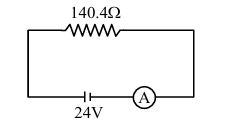 Answer: 160Step-by-step solution →
 - Question 57Physics· Mechanical Properties of Matter
A wire of cross sectional area A , modulus of elasticity and length 2 m is stretched between two vertical rigid supports. When a mass of 2 kg is suspended at the middle it sags lower from its original position making angle radian on the points of support. The value of is consider . (given : )
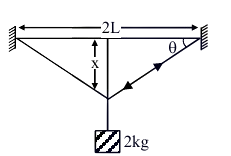 Answer: 1Step-by-step solution →
 - Question 58Physics· Wave Optics
Two coherent monochromatic light beams of intensities and are superimposed. The difference between maximum and minimum possible intensities in the resulting beam is . The value of is .
Answer: 8Step-by-step solution → - Question 59Physics· Sound Waves
Two open organ pipes of length 60 cm and 90 cm resonate at and harmonics respectively. The difference of frequencies for the given modes is Hz. (Velocity of sound in air )
Answer: 740Step-by-step solution → - Question 60Chemistry· General Organic Chemistry

The correct arrangement for decreasing order of electrophilic substitution for above compounds
- Option A:
(IV) (I) (II) (III)
- Option B:
(III) (I) (II) (IV)
- Option C:
(II) (IV) (III) (I)
- Option D:
(III) (IV) (II) (I)
Answer: BStep-by-step solution → - Question 61Chemistry· Some Basic Concepts of Chemistry (Mole Concept) + Stoichiometry
Molality of aqueous solution of is .
[Given: Density of solution , molar mass of ]
- Option A:
2.90 m
- Option B:
2.79 m
- Option C:
1.90 m
- Option D:
3.85 m
Answer: BStep-by-step solution → - Question 62Chemistry· Biomolecules
The incorrect statements regarding enzymes are:
(A) Enzymes are biocatalysts.
(B) Enzymes are non-specific and can catalyse different kinds of reactions.
(C) Most Enzymes are globular proteins.
(D) Enzyme - oxidase catalyses the hydrolysis of maltose into glucose.
Choose the correct answer from the options given below:
- Option A:
(B) and (C)
- Option B:
(B), (C) and (D)
- Option C:
(B) and (D)
- Option D:
(A), (B) and (C)
Answer: CStep-by-step solution → - Question 63Chemistry· Electrochemistry
How can an electrochemical cell be converted into an electrolytic cell?
- Option A:
Applying an external opposite potential greater than
- Option B:
Reversing the flow of ions in salt bridge.
- Option C:
Applying an external opposite potential lower than .
- Option D:
Exchanging the electrodes at anode and cathode.
Answer: AStep-by-step solution → - Question 64Chemistry· d and f Block Elements
Arrange the following elements in the increasing order of number of unpaired electrons in it.
(A) Sc
(B) Cr
(C) V
(D) Ti
(E) Mn
Choose the correct answer from the options given below:
- Option A:
(C) (E) (B) (A) (D)
- Option B:
B C (D) (E) (A)
- Option C:
(A) (D) (C) (B) €
- Option D:
A) (D) (C) (E) (B)
Answer: DStep-by-step solution → - Question 65Chemistry· Alkali Metals - Group 1
Match List-I with List-II.
List-I Alkali Metal List-II Emission Wavelength in (A) Li (I) 589.2 (B) Na (II) 455.5 (C) Rb (III) 670.8 (D) Cs (IV) 780.0 Choose the correct answer from the options given below:
- Option A:
(A)-(I), (B)-(IV), (C)-(III), (D)-(II)
- Option B:
(A)-(III), (B)-(I), (C)-(IV), (D)-(II)
- Option C:
(A)-(IV), (B)-(II), (C)-(I), (D)-(III)
- Option D:
(A)-(II), (B)-(IV), (C)-(III), (D)-(I)
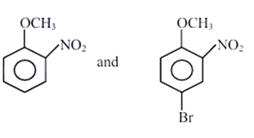
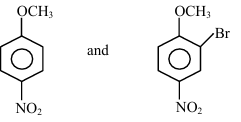
Answer: BStep-by-step solution → - Question 66Chemistry· Aromatic Compounds
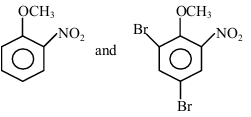
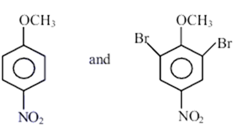
The major products formed:

A and B respectively are:
- Option A:
- Option B:
- Option C:
- Option D:
Answer: BStep-by-step solution → - Question 67Chemistry· Isomerism
The incorrect statement regarding the geometrical isomers of 2-butene is:
- Option A:
cis-2-butene and trans-2-butene are not interconvertible at room temperature.
- Option B:
cis-2-butene has less dipole moment than trans-2-butene.
- Option C:
trans-2-butene is more stable than cis-2-butene.
- Option D:
cis-2-butene and trans-2-butene are stereoisomers.
Answer: BStep-by-step solution → - Question 68Chemistry· Chemical Bonding
Given below are two statements, one is labelled as Statement I and the other is labelled as Statement II.
Statement I: and both exhibit hybridisation.
Statement II: Both and exhibit hybridisation.
In the light of the above statements, choose the correct answer from the options given below:
- Option A:
Statement I is true but Statement II is false
- Option B:
Both Statement I and Statement II are true
- Option C:
Both Statement I and Statement II are false
- Option D:
Statement I is false but Statement II is true
Answer: CStep-by-step solution → - Question 69Chemistry· p-Block (I) (Grp. 13, 14)
The number of ions from the following that are expected to behave as oxidising agent is:
- Option A:
3
- Option B:
4
- Option C:
1
- Option D:
2
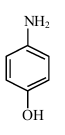
Answer: DStep-by-step solution → - Question 70Chemistry· Nitrogen Containing Organic Compounds
Identify the product (A) in the following reaction.

- Option A:
- Option B:
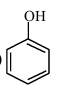
- Option C:
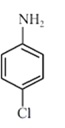
- Option D:
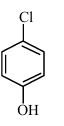
Answer: BStep-by-step solution → - Question 71Chemistry· Metallurgy
The correct statements among the following, for a "chromatography" purification method is:
- Option A:
Organic compounds run faster than solvent in the thin layer chromatographic plate.
- Option B:
Non-polar compounds are retained at top and polar compounds come down in column chromatography.
- Option C:
of a polar compound is smaller than that of a non-polar compound
- Option D:
is an integral value.
Answer: CStep-by-step solution → - Question 72Chemistry· p-Block (I) (Grp. 13, 14)
Evaluate the following statements related to group 14 elements for their correctness.
(A) Covalent radius decreases down the group from C to Pb in a regular manner.
(B) Electronegativity decreases from C to Pb down the group gradually.
(C) Maximum covalence of C is 4 whereas other elements can expand their covalence due to presence of d orbitals.
(D) Heavier elements do not form bonds.
(E) Carbon can exhibit negative oxidation states.
Choose the correct answer from the options given below:
- Option A:
(C),(D) and (E) Only
- Option B:
(A) and (B) Only
- Option C:
(A), (B) and (C) Only (4)
- Option D:
(C) and (D) Only
Answer: AStep-by-step solution → - Question 73Chemistry· Redox Reactions
Match List–I (Reaction) with List–II (Type of redox reaction).
List–I (Reaction) List–II (Type of redox reaction) (A) (I) Decomposition (B) (II) Displacement (C) (III) Disproportionation (D) (IV) Combination Choose the correct answer from the options given below:
- Option A:
(A)-(I), (B)-(II), (C)-(III), (D)-(IV)
- Option B:
(A)-(III), (B)-(II), (C)-(I), (D)-(IV)
- Option C:
(A)-(II), (B)-(III), (C)-(IV), (D)-(I)
- Option D:
(A)-(IV), (B)-(I), (C)-(II), (D)-(III)
Answer: DStep-by-step solution → - Question 74Chemistry· Coordination Compounds
The correct IUPAC name of is:
- Option A:
bis(trimethylphosphine)dibromoplatinum(II)
- Option B:
bis[bromo(trimethylphosphine)]platinum(II)
- Option C:
dibromobis(trimethylphosphine)platinum(II)
- Option D:
dibromodi(trimethylphosphine)platinum(II)
Answer: CStep-by-step solution → - Question 75Chemistry· Coordination Compounds
Match List-I with List-II
List-I Tetrahedral Complex List-II Electronic configuration (A) (I) (B) (II) (C) (III) (D) (IV) Choose the correct answer from the option given below:
- Option A:
(A)-(I), (B)-(III), (C)-(IV), (D)-(II)
- Option B:
(A)-(IV), (B)-(III), (C)-(I), (D)-(II)
- Option C:
(A)-(III), (B)-(IV), (C)-(II), (D)-(I)
- Option D:
(A)-(III), (B)-(I), (C)-(IV), (D)-(II)
Answer: DStep-by-step solution → - Question 76Chemistry· Chemical Equilibrium
The ratio for the reaction: is:
- Option A:
- Option B:
RT
- Option C:
1
- Option D:
Answer: DStep-by-step solution → - Question 77Chemistry· Nitrogen Containing Organic Compounds
An amine ( X ) is prepared by ammonolysis of benzyl chloride. On adding p-toluenesulphonyl chloride to it the solution remains
clear. Molar mass of the amine formed is .
(Given molar mass in )
Answer: 287Step-by-step solution → - Question 78Chemistry· Practical Inorganic chemistry (Qualitative Analysis)
Consider the following reactions
The number of protons that do not involve in hydrogen bonding in the product B is .
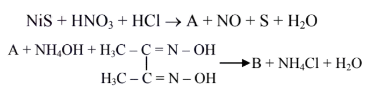 Answer: 12Step-by-step solution →
 - Question 79Chemistry· Solutions and Colligative Properties
When ' x ' methanol (molar mass ; density ) is added to 100 mL water density , the following diagram is obtained.

[Given: Molal freezing point depression constant of water at is ]
Answer: 543Step-by-step solution → - Question 80Chemistry· Alcohols, Ethers and Phenols

The ratio of number of oxygen atoms to bromine atoms in the product is .
Answer: 15Step-by-step solution → - Question 81Chemistry· General Organic Chemistry
Number of carbocation from the following that are not stabilized by hyperconjugation is.
 Answer: 5Step-by-step solution →
 - Question 82Chemistry· Thermodynamics & Thermochemistry
For the reaction at and . The reaction will become spontaneous above K
Answer: 2000Step-by-step solution → - Question 83Chemistry· Chemical Bonding
Total number of species from the following with central atom utilising hybrid orbitals for bonding is…
,
Answer: 6Step-by-step solution → - Question 84Chemistry· Chemical Kinetics
Consider the two different first order reactions given below
(Reaction 1
(Reaction 2)
The ratio of the half life of Reaction 1: Reaction 2 is . If and represent the time taken to complete and of Reaction 1 and Reaction 2, respectively, then the value of the ratio is (nearest integer). [Given: and ]
Answer: 17Step-by-step solution → - Question 85Chemistry· Structure of Atom
For hydrogen atom, energy of an electron in first excited state is . K.E. of the same electron of hydrogen atom is . Value of is \_\_\_\_\_$$\times 10^{-1}\ \mathrm{eV} (nearest integer).
Answer: 34Step-by-step solution → - Question 86Chemistry· d and f Block Elements
Among and , the spin-only magnetic moment value of the species with least oxidising ability is.
BM (Nearest integer). (Given atomic member )
Answer: 0Step-by-step solution →
Stuck on one of these?
Practise questions like them — free, with a tutor that explains every step.