Mathematics · Straight lines
JEE Main 2026 — 23 January, Evening Shift — Question 4
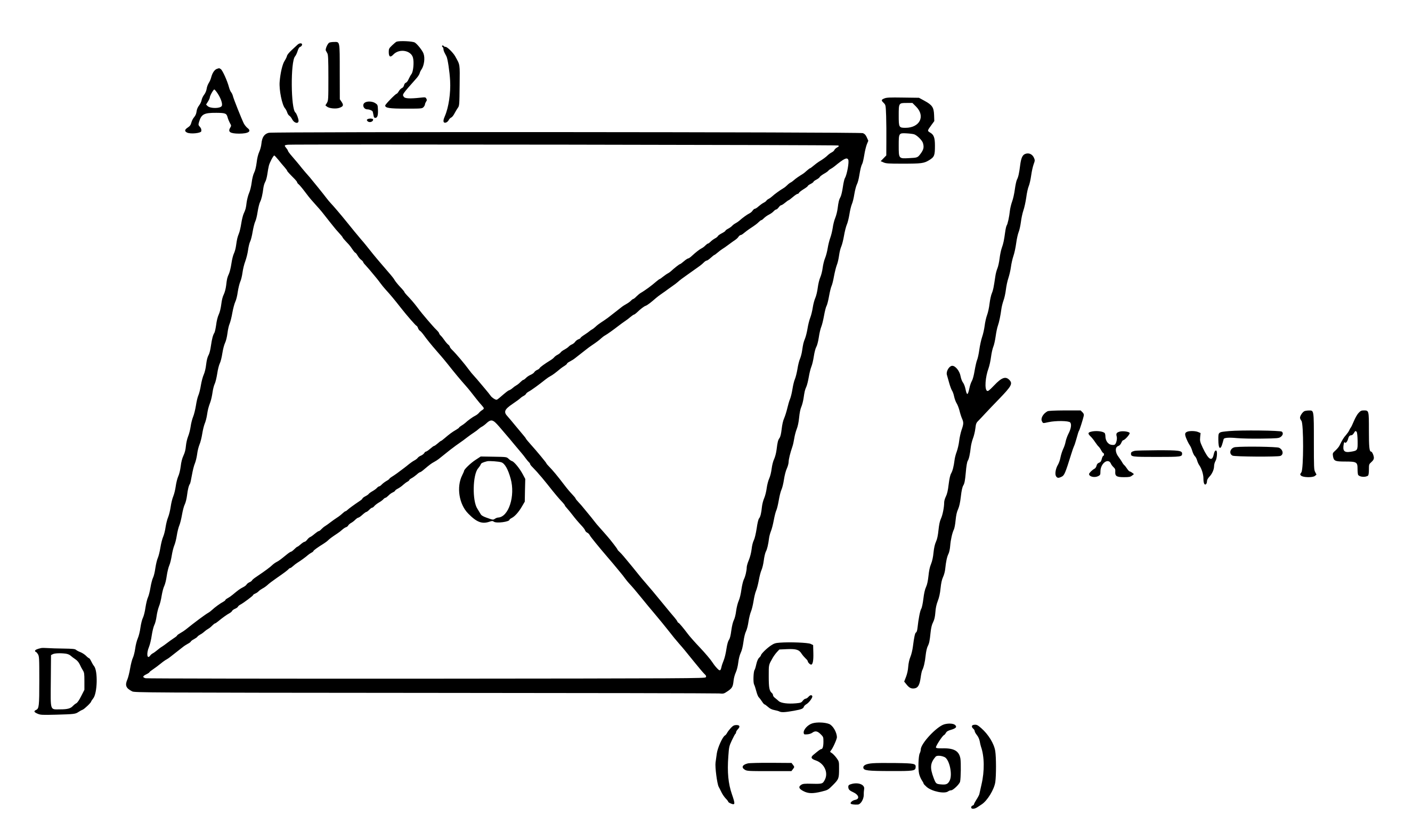
Let and be two diagonally opposite vertices of a rhombus, whose sides AD an BC are parallel to the line . If and are the other two vertices, then is equal to :
- Option A:
9
- Option B:
3
- Option C:Correct
6
- Option D:
1
Answer: C
Step-by-step solution
Midpoint of A and C has coordinates . In a rhombus, diagonals bisect each other, so the midpoint of BD is also . Thus and . Hence . Therefore .
Answer key and solution verified before publishing.
Practise Straight lines
Start with this question, then two more from the same chapter — with a tutor that explains every step. Free.
- Exam
- JEE Main 2026
- Subject
- Mathematics
- Chapter
- Straight lines
- Topic
- Pair of Straight Lines