Chemistry · Chemical Kinetics

JEE Main 2026 — 24 January, Morning Shift — Question 49

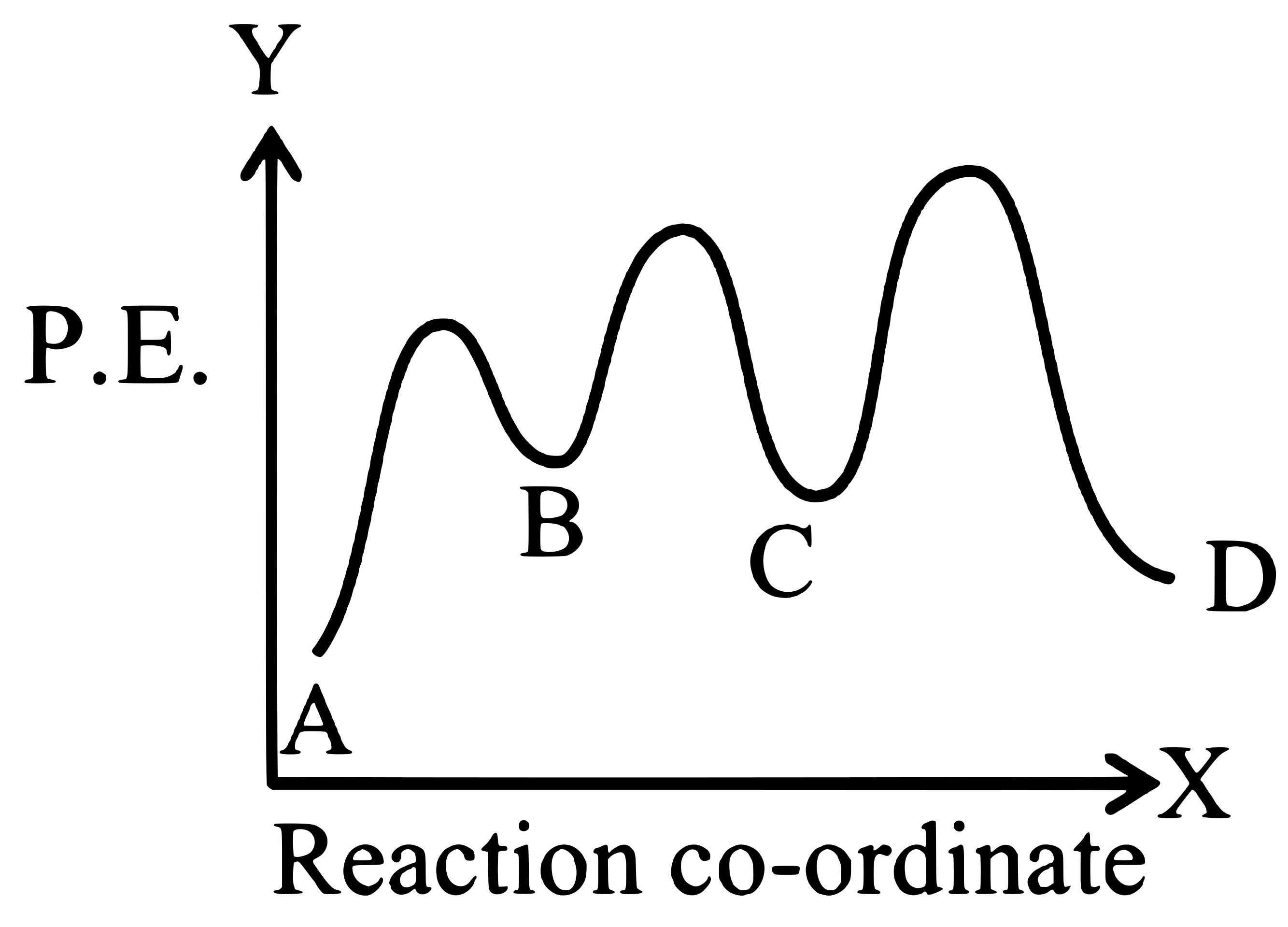
A→D\mathrm{A} \rightarrow \mathrm{D} is an endothermic reaction occurring in three steps (elementary).

(i) A→BΔHi=+ve\mathrm{A} \rightarrow \mathrm{B} \Delta \mathrm{H}_{\mathrm{i}}=+\mathrm{ve}

(ii) B→CΔHii=−ve\mathrm{B} \rightarrow \mathrm{C} \Delta \mathrm{H}_{\mathrm{ii}}=-\mathrm{ve}

(iii) C→DΔHiii =−ve\mathrm{C} \rightarrow \mathrm{D} \Delta \mathrm{H}_{\text {iii }}=-\mathrm{ve}

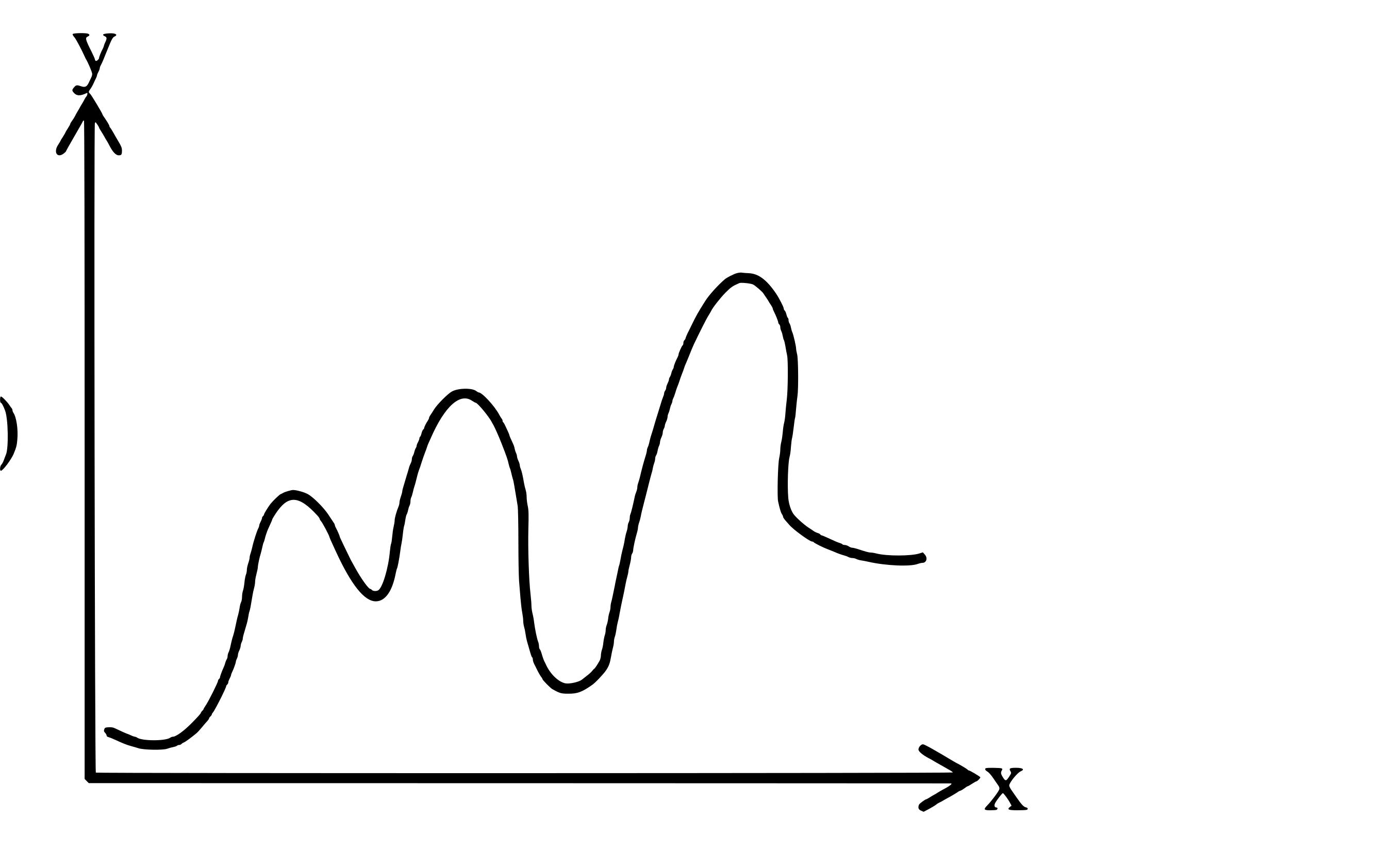
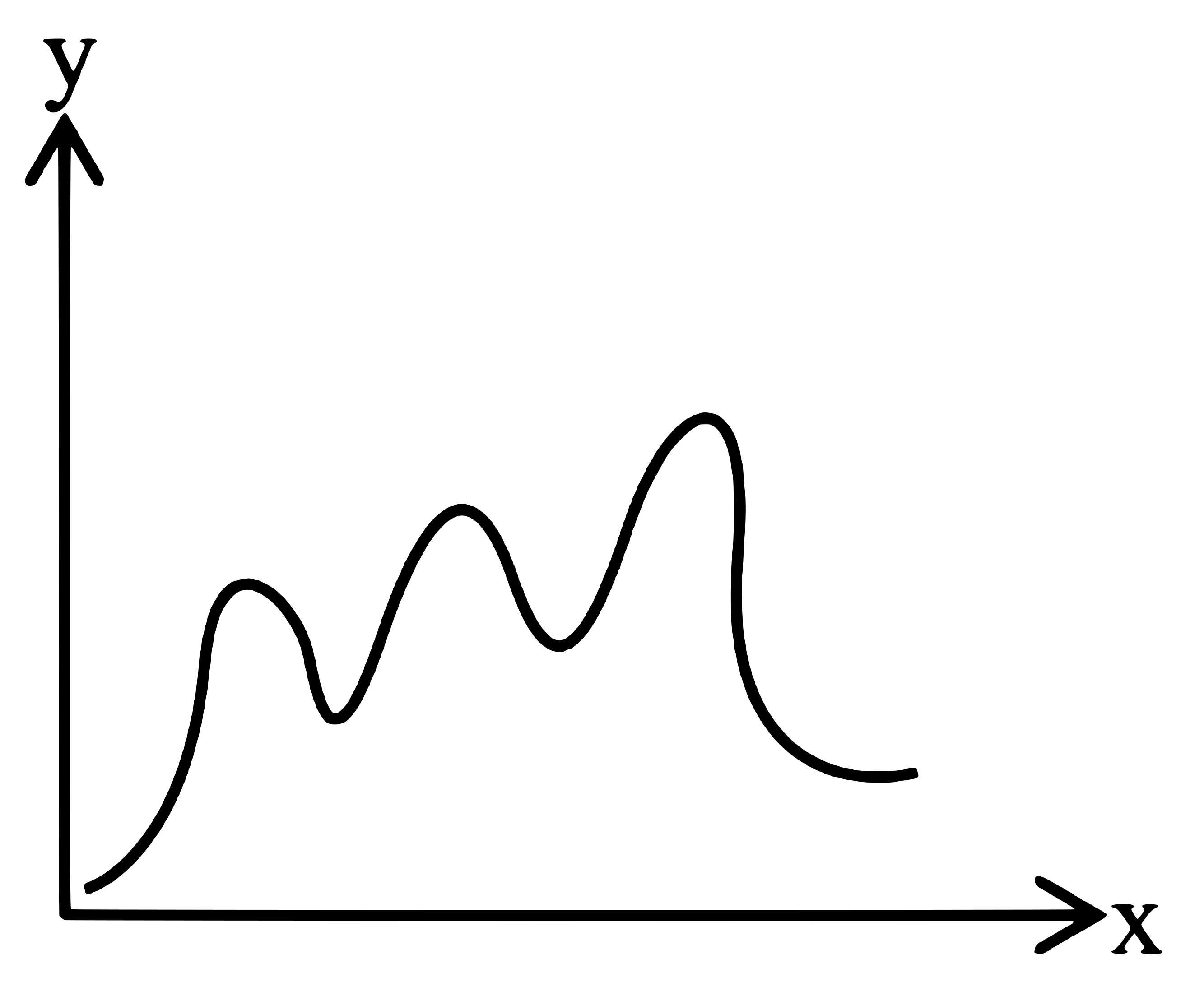
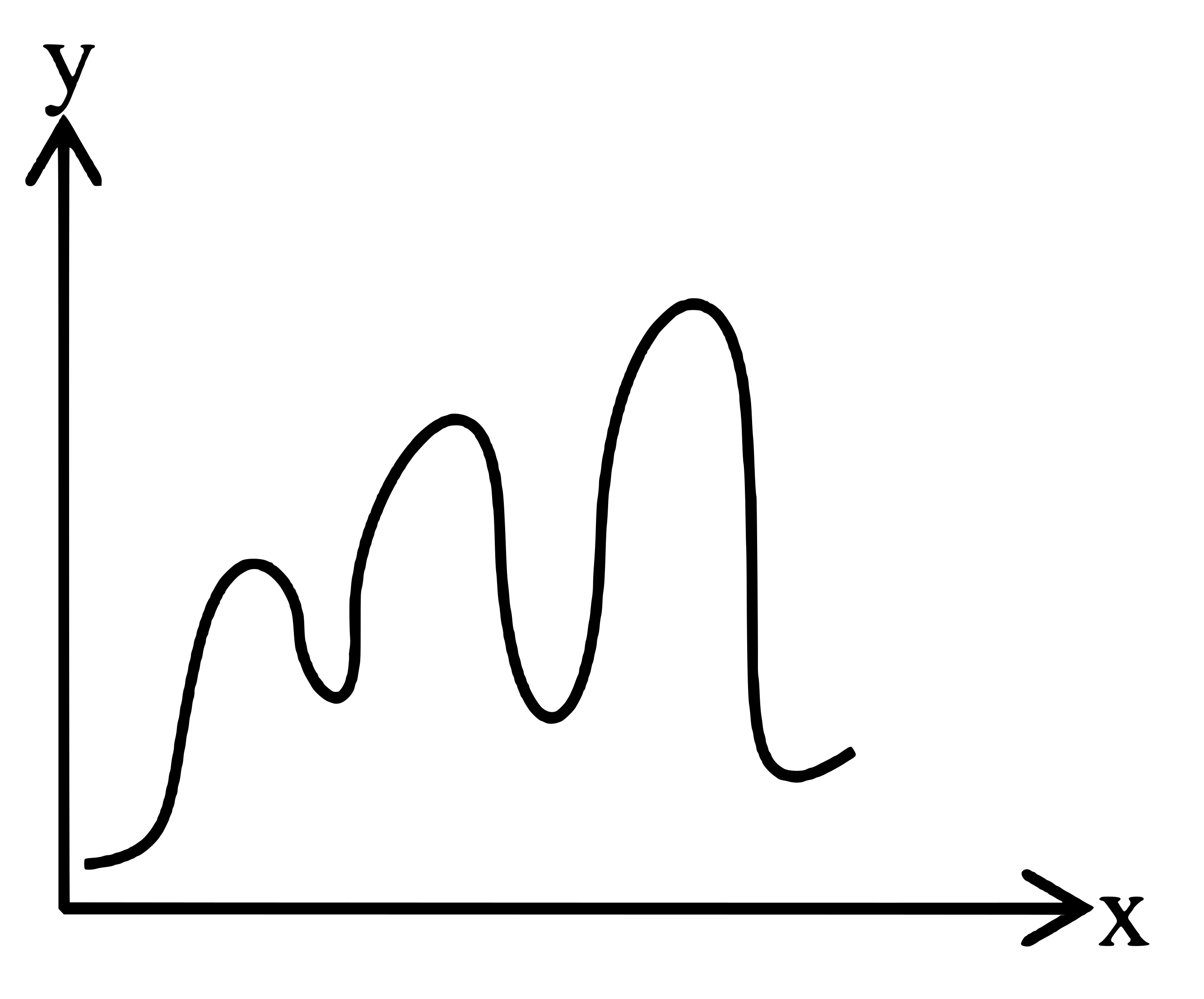
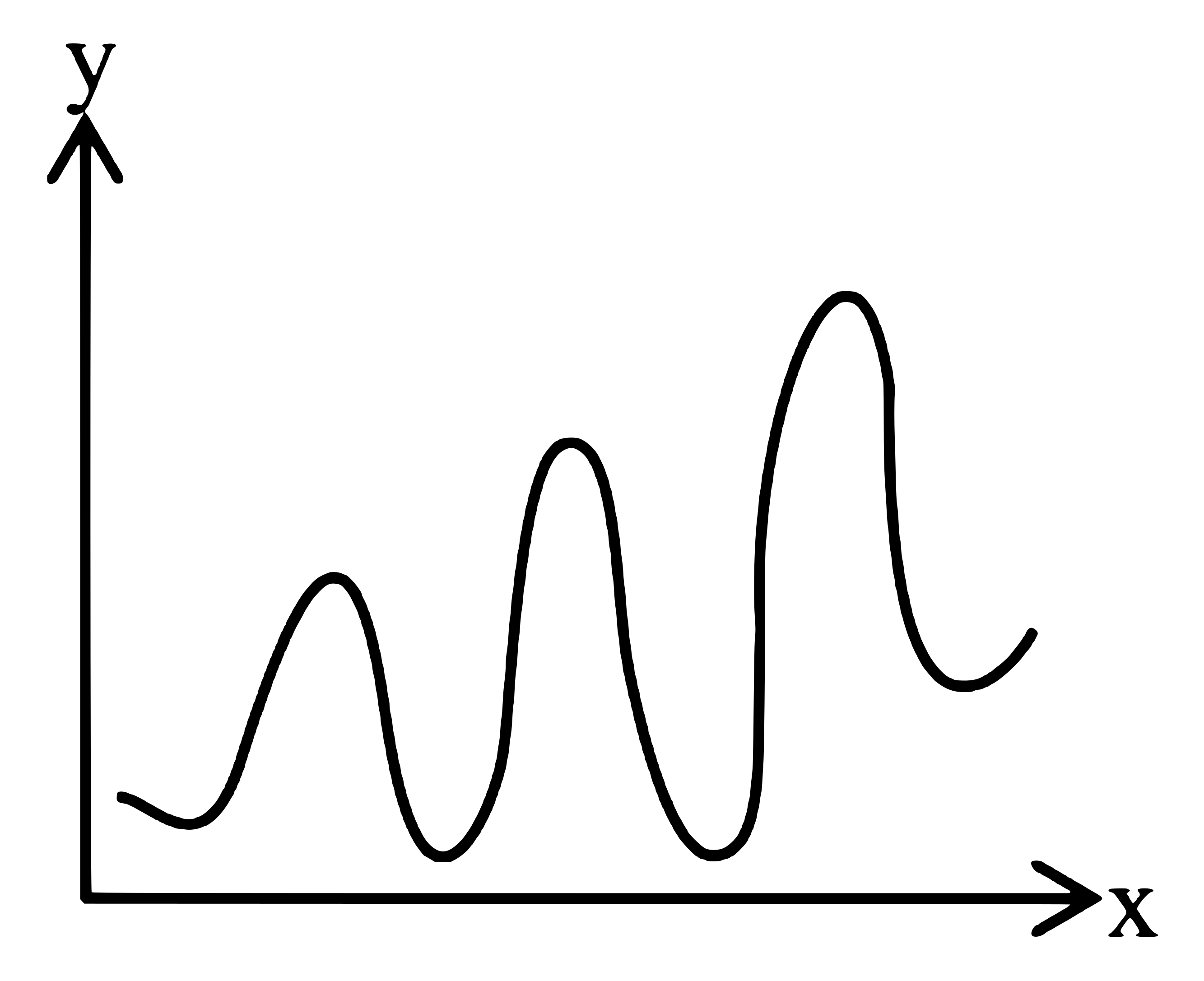
Which of the following graphs between potential energy ( y -axis) vs reaction coordinate ( x -axis) correctly represents the reaction profile of A→D\mathrm{A} \rightarrow \mathrm{D} ?

  1. Option A:
    Option A figure
  2. Option B:
    Option B figure
  3. Option C:
    Option C figure
    Correct
  4. Option D:
    Option D figure

Answer: C

Step-by-step solution

Given : A→D;ΔrH=(+)ve=ED−EA∴ED>EA\mathrm{A} \rightarrow \mathrm{D} ; \Delta_{\mathrm{r}} \mathrm{H}=(+) \mathrm{ve}=\mathrm{E}_{\mathrm{D}}-\mathrm{E}_{\mathrm{A}} \therefore \mathrm{E}_{\mathrm{D}}>\mathrm{E}_{\mathrm{A}} Mechanism A→B;ΔrH=(+)ve⇒EB>EA\mathrm{A} \rightarrow \mathrm{B} ; \Delta_{\mathrm{r}} \mathrm{H}=(+) \mathrm{ve} \Rightarrow \mathrm{E}_{\mathrm{B}}>\mathrm{E}_{\mathrm{A}} B→C;ΔrH=(−)ve⇒EC<EB\mathrm{B} \rightarrow \mathrm{C} ; \Delta_{\mathrm{r}} \mathrm{H}=(-) \mathrm{ve} \Rightarrow \mathrm{E}_{\mathrm{C}}<\mathrm{E}_{\mathrm{B}} C→D;ΔrH=(−)ve⇒ED<EC\mathrm{C} \rightarrow \mathrm{D} ; \Delta_{\mathrm{r}} \mathrm{H}=(-) \mathrm{ve} \Rightarrow \mathrm{E}_{\mathrm{D}}<\mathrm{E}_{\mathrm{C}}

Solution figure

Answer key and solution verified before publishing.

Practise Chemical Kinetics

Start with this question, then two more from the same chapter — with a tutor that explains every step. Free.

Exam
JEE Main 2026
Subject
Chemistry
Chapter
Chemical Kinetics
Topic
Collision Theory and Its Applications