Physics · Geometrical Optics
JEE Main 2026 — 5 April, Evening Shift — Question 15
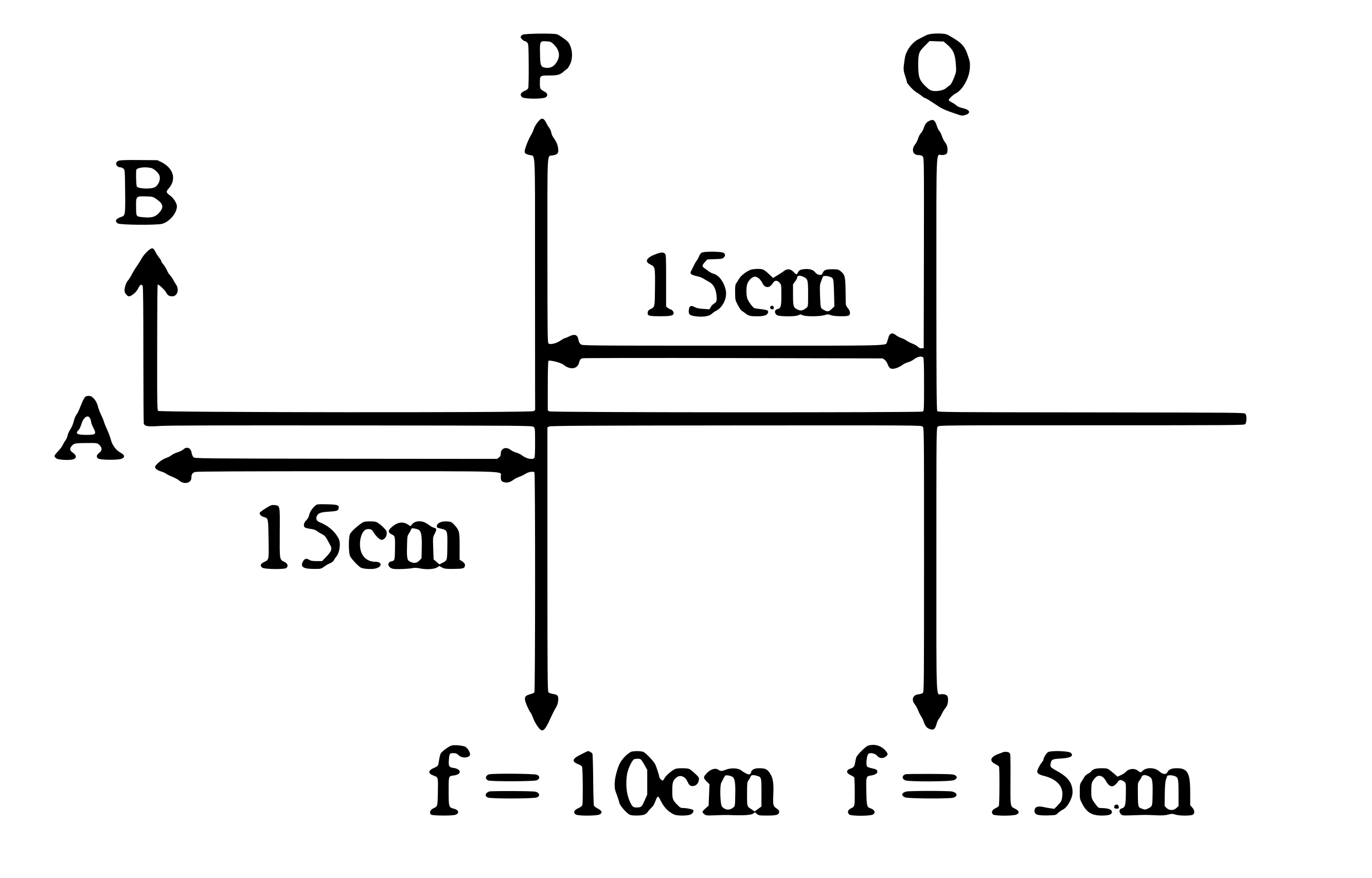
An object AB is placed on the left of a convex lens P of focal length . Another convex lens Q is now placed right of lens P. If the focal length of lens Q is , the final image is
- Option A:
virtual, formed at right of lens Q, with a size bigger than that of AB
- Option B:Correct
real, formed at right of lens Q, with a size same as that of AB
- Option C:
formed at infinity
- Option D:
real, formed at right of lens Q, with a size smaller than that of AB
Answer: B
Step-by-step solution
For lens P: ⇒ cm (30 cm right of P, so 15 cm left of Q). For lens Q: object distance = +15 cm (virtual object? Actually object for Q is 15 cm to its left, so u = +15 cm? Sign convention: for Q, object is on left, so u = -15 cm? Let's follow: , with u = -15 cm, f=+15 cm ⇒ ⇒ v' = ∞? That gives infinity. But solution says V' = 7.5 cm. There's confusion. The given solution uses ⇒ V' = 7.5 cm, meaning they took u = +15 cm (object to the right? Actually after first lens, image is at 30 cm right of P, which is 15 cm right of Q? No: Q is 15 cm right of P, so image from P is at 30 cm right of P = 15 cm right of Q. That is a real image on the right side of Q, so for Q it acts as a virtual object? The solution treats it as u = +15 cm (object on the right). Then magnification = (30/-15)*(7.5/15) = -1, same size, real image.
Answer key and solution verified before publishing.
Practise Geometrical Optics
Start with this question, then two more from the same chapter — with a tutor that explains every step. Free.
- Exam
- JEE Main 2026
- Subject
- Physics
- Chapter
- Geometrical Optics
- Topic
- Lenses and Their Combinations, Silvering of Lens